Richard III by William Shakespeare
Directed by Kathryn Shaw
Bard on the Beach Shakespeare Festival,
Douglas Campbell Studio Stage, Vanier Park.
July 13 to September 23, 2011
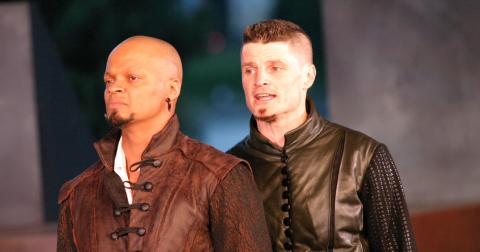
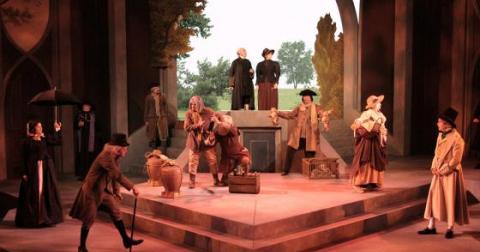
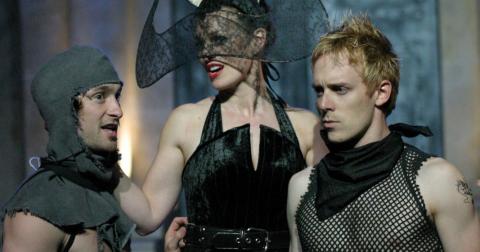
Vancouver, BC. At the end of Henry VI: The War of the Roses, I left the Studio Stage theatre looking forward to seeing Bob Frazer as the unrepentantly villainous Richard in the concluding play of Bard's Kings History Play Cycle, Richard III.
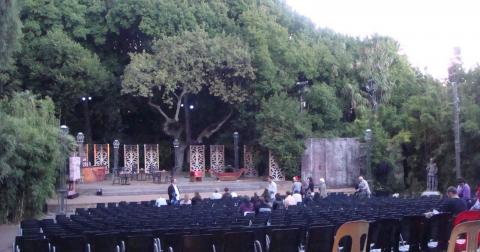
The day of the show's opening was also the first 7 hour marathon day of the intermediate level wine course I am taking. While we learned about regions and varietals, we also tasted 18 wines, 9 during the morning and 9 in the afternoon session. I rushed home to change and made it to Vanier Park in time to pick up The Merchant's Antipasto picnicbasket from Emelle's Catering, and wolf it down before the show began. I was worried that sheer exhaustion plus whatever alcohol could be left in my system might cause me to nod off but to the contrary, I was riveted throughout the show and could not take my eyes off the stage.
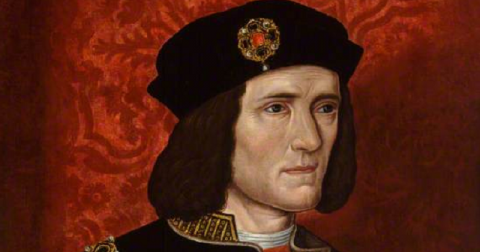
Mention Richard III to most people and whether or not they have seen Shakespeare's play, they associate his name with the murder of the young Princes in the Tower of London. It's like Medea. Mention her name and the first association is infanticide not the complex and multi-faceted nature of this woman. So leaving aside the little princes, what is this Richard all about?
Henry VI: The Wars of the Roses
adapted and directed by Christopher Weddell
from Henry VI Parts I to III by William Shakespeare
Bard on the Beach Shakespeare Festival,
Studio Stage, Vanier Park.
June 30 to September 21, 2011
Vancouver, BC: With Henry VI and Richard III, Bard in the Beach completes the History Cycle of Shakespeare's plays about the 14th and 15th century Kings of England and the civil wars between the Houses of Lancaster and York, rival families within the royal House of Plantagenet. The play cycle at Vanier Park commenced in 2009 with the production of Richard II and continued in 2010 with Falstaff and Henry V.
Here's a quick summary of the saga related in the Kings' plays. Henry IV who had deposed Richard II established the House of Lancaster (red rose) on the throne of England. His wild young son matured into the warrior king, Henry V, he of "once more unto the breach, dear friends" fame. Unfortunately Henry V died young, and his infant son became king Henry VI. Richard, Duke of York (white rose) challenged young Henry's right to the throne and a series of battles between the armies of Lancaster and York took place over the next thirty some years. Finally a Lancaster, Henry Tudor, defeated Richard III of York. Henry VII married Elizabeth of York to unite the warring houses, and the Tudors ruled England over the next century.
The Merchant of Venice by William Shakespeare
Directed by Rachel Ditor,
Bard Mainstage, Vanier Park,
June 15 to Sept 23, 2011
Vancouver, BC: Of all the Shakespeare plays I have seen I find The Merchant of Venice to be among the most compelling yet certainly the most disturbing to watch. While taking into account the likelihood that the play's reception by a contemporary audience would be very different from an audience of Shakespeare's own time, the script sets up so many powerful and conflicting issues that one is on a non-stop rollercoaster ride.
As You Like It by William Shakespeare
Directed by David Mackay
Bard on the Beach,
Bard Mainstage, Vanier Park,
June 2 to Sept 24, 2011
Vancouver, BC: Bard on the Beach opens its 2011 season with As You Like it - and like it I did, a lot. Though I have always preferred watching the intense drama of Shakespeare's tragedies to the whimsical frolics of mistaken identities and gender bending of his comedies, I really enjoyed this production.
Henry V by William Shakespeare
Directed by Meg Roe
Bard on the Beach Shakespeare Festival,
Studio Stage, Vanier Park.
to September 24th, 2010
Vancouver, BC: Following her 2008 directing debut at Bard on the Beach with a lively production of The Tempest, Meg Roe has again created a visually exciting and engrossing work in this year's production of Henry V. And this year, instead of having Alessandro Juliani produce a complete soundscape to underscore the production as in The Tempest, she places him front and centre as Henry V. A multi-talented artist - he performs both tasks, sound design (for The Tempest) and acting in the lead role (of two plays at the same time!), with equal aplomb. Juliani is quite entrancing to watch onstage, and he played a Hal and a Henry worthy of the crown he ultimately attains.
Falstaff
Adapted by Errol Durbach from Henry lV, 1 & ll.
Directed by Glynis Leyshon
Bard on the Beach Shakespeare Festival,
Studio Stage, Vanier Park.
to September 22nd, 2010
Vancouver, BC: Having enjoyed both the Mainstage productions of Much Ado about Nothing and Antony and Cleopatra, I did not want to miss Bard's two Studio Stage shows of the 2010 season. So before I took off for a London visit to dine and see theatre prior to going Ballroom Dancing round the British Isles, I made my plans to see Falstaff and Henry V on successive nights soon after my return.
Twelfth Night by William Shakespeare Directed by Tariq Leslie What You Will Equity Co-op, Jericho Arts Centre July 2 to July 24, 2010
Vancouver, BC: It is a fascinating experience to see how a directorial approach can alter one's perception of a play, particularly something so familiar as Twelfth Night. The production of Twelfth Night that I saw by Bard on the Beach in the 2008 season, was played with rapid-fire intensity and fairly sparkled with light-hearted humour.
This pace of this production of Twelfth Night was much slower and more leisured. This brought out the darker aspects of the play so the overall mood of the play was heavier and more ponderous.
The Winter's Tale by William Shakespeare Directed by Anita Rochon Studio 58, Langara College Nov 19 to Dec 13, 2009
Vancouver, BC: Led by two Studio 58 alumni, director Anita Rochon, and Mike Wasko as the insanely jealous Sicilian king Leontes, the student cast succeed in presenting a interesting and entertaining production of The Winter's Tale. I use the word succeed deliberately because as I look back on my reviews of other productions of this play (Winter's Tale, Summer's Storm), I note that this play in more ways than the conventional meaning for me is a problem play, and it is a real challenge to pull it off well.
Richard II by William Shakespeare
Directed by Christopher Weddell
Studio Stage at Vanier Park
Bard on the Beach
till September 18, 2009
Vancouver, BC:
Vancouver's Bard on the Beach Company has undertaken as a "noble goal" to stage Shakespeare's entire dramatic canon by the 25th anniversary of the company, five years hence. As part of this ambitious objective, Bard will be presenting a cycle of Shakespeare's History Plays through the 2009 to 2011 seasons as discussed in my How They See It Chat with Bard Artistic Director, Christopher Gaze.This year's staging of Richard II starts this series of plays. While most people have some familiarity with the more frequently produced story of Shakespeare's twisted, malevolent, murdering Richard III, I suspect that, like I until recently, they don't know too much about where Richard II fits into the whole English kings / Wars of the Roses saga.
Here is a bit of the pre-history.
King Edward III had five sons who survived to adulthood. The oldest , Edward the Black Prince was the father of Richard. When the Black Prince died, Richard became the heir apparent and a year later, on the death of Edward III, the 10 year old Richard succeeded his grandfather as King of England. The country was governed by councils until Richard was old enough to rule. Two of Richard's uncles, John of Gaunt, a man of influence and power, and Edmund, Duke of York, and their sons also play important parts in Shakespeare's version of events. The murder of a third uncle, the Duke of Gloucester is the trigger that initiates the events in Richrd II.
When the play begins King Richard II (Haig Sutherland) has a problem. His cousin Henry Bolingbroke (John Murphy) has accused Sir Thomas Mowbray (Craig Erickson) of murdering Riichard's uncle the Duke of Gloucester. Rumour has it that Richard had secretly ordered the murder. The king decides that Bolingbroke and Gloucester may duel it out, but before the fight begins, Richard exiles Bolingbroke for ten years and banishes Mowbray for life. Bolingbroke leaves, and shortly thereafter his father, John of Gaunt (Duncan Fraser), dies. The King needs money to suppress a rebellion in Ireland so he disinherits Bolingbroke, grabs the estate and takes off to Ireland, leaving his uncle, Duke of York (David Marr) in charge. Bolingbroke comes back to England to demand his inheritance be restored. The populace support Bolingbroke and not Richard. The king's pals, Sir John Bushy (Craig Erickson) and Sir Henry Green (Ashley O'Connell) wont defend him. Having screwed up royally, so to speak, in Ireland, Richard arrives back in England with no army and no support. He cedes his crown to Bolingbroke who becomes King Henry IV. Bolingbroke expresses concern about his son, Henry, who is running wild in bad company - setting the storyline up for Henry IV parts 1 and 2. Richard goes to prison to reflect on his life and folly but is murdered there by Exton (Craig Erickson).. The new king is "horrified" when told of the murder, exiles Exton, and decides to make a pilgrimage to the Holy Land to atone.
All's Well that Ends Well by William Shakespeare
Directed by Rachel Ditor
Douglas Campbell Studio Stage at Vanier Park
Bard on the Beach
till September 19, 2009
Vancouver, BC: All's Well that Ends Well is all about Helena, a young woman, in love with a man who is above her social class and can't see beyond her lower status to appreciate her many virtues. With a plot that incorporates common theatrical devices of disguised identities, token rings, and a buffoonish braggart who gets his come-uppance, Lois Anderson's vibrant portrayal of the intelligent, resourceful, though lovesick Helena provides the tensile strength that holds the play together. With every emotion, from adoration to pain, expressed with subtlety through eyes and voice, she brings an innate dignity to Helena that makes it clear why she is adored by everyone except the foolish Bertram.
Recent comments